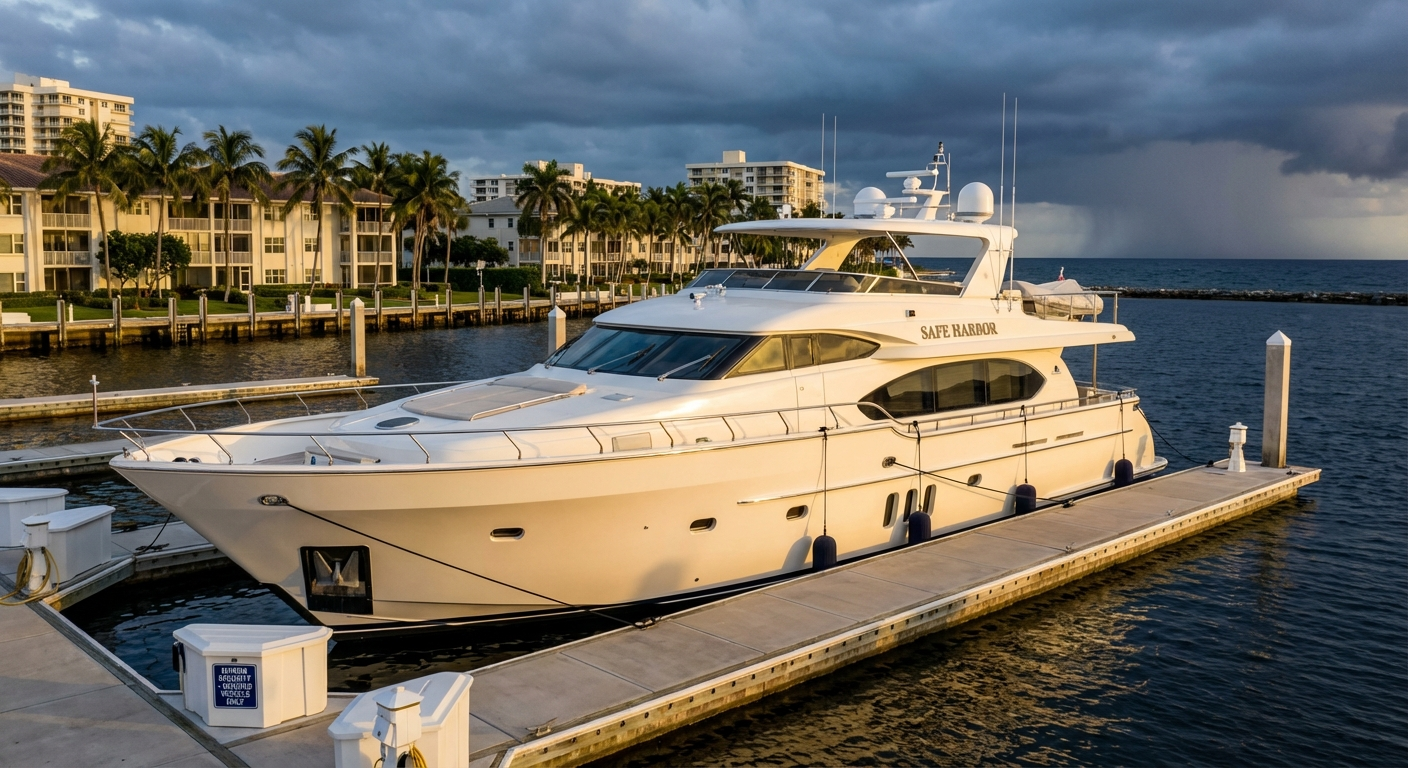
Florida leads the nation in registered vessels, and with that comes unique insurance challenges. After the 2024 hurricane season—where Helen and Milton hit within 13 days of each other—understanding yacht insurance has never been more critical. Here's everything you need to know about protecting your investment.
Why Yacht Insurance Matters in Florida
Unlike auto insurance, Florida doesn't legally require yacht insurance. However, going without coverage is a significant financial risk, especially given:
- Hurricane exposure — Florida averages 1-2 direct hits per decade, but 2024 proved seasons can escalate quickly
- High theft rates — Marine theft is prevalent in South Florida
- Liability risks — A single accident can result in million-dollar lawsuits with multiple injuries
- Marina requirements — Most marinas require proof of insurance
- Financing requirements — Lenders always require comprehensive coverage
Types of Yacht Insurance Coverage
Hull Insurance (First Party Property Damage)
Covers physical damage to your vessel from accidents, collisions, and covered perils. Two main valuation types:
- Agreed Value — You and the insurer agree on a value upfront. In a total loss, you get paid that full amount regardless of market fluctuations. This is always the recommended option.
- Actual Cash Value (ACV) — Like auto insurance: they take comparable boats, throw out the high and low, and pay you the middle. Cheaper premiums but riskier—market values can drop significantly.
💡 Pro Tip: Always Choose Agreed Value
As marine insurance veteran Matt Beck of Beck Marine Insurance explains: "Agreed value is always better simply because it insulates the owner from market fluctuations." Don't gamble on what the market thinks your boat is worth after a loss.
Liability Coverage
Protects you if your yacht causes injury or property damage to others. Critical insight: boat accidents often result in severe injuries to multiple people, not just one. Recommended minimums:
- Under 40 ft: $300,000-500,000
- 40-60 ft: $500,000-1,000,000
- 60+ ft: $1,000,000 or more
Consider an umbrella policy: Work with your insurance agent to see if your yacht can be added to your personal umbrella policy for excess liability coverage. This gives you an extra layer of protection beyond your boat policy's limits.
On-Water Assistance & Towing
This coverage may be built into your policy, available as a separate add-on, or not available at all—it varies by carrier. Don't assume you're covered. Ask specifically.
Medical Payments
Covers medical expenses for you and passengers regardless of fault. Typically $5,000-25,000 per person.
Uninsured Boater
Protects you if hit by an uninsured or underinsured vessel. Often overlooked but important.
Personal Effects
Covers electronics, fishing gear, and personal items aboard. Review limits—often lower than expected.
Florida-Specific Considerations
Hurricane Coverage & Deductibles
This is where Florida yacht insurance gets complicated—and expensive:
- Named storm deductible — Can range from 2% to as high as 20% of hull value. Yes, 20%.
- Lightning strike deductible — Up to 5% in some policies (lightning is the most common claim on the East Coast)
- Haul-out requirements — Many policies require you to haul within 24-48 hours of a named storm warning
- Named windstorm exclusion — Some policies, especially in the Caribbean, exclude named windstorm damage entirely
- Hurricane hole approval — Some insurers require pre-approved storm locations
⚠️ The Math on Hurricane Deductibles
A $500,000 yacht with a 10% named storm deductible means you pay the first $50,000 of any hurricane damage. At 20%? That's $100,000 out of pocket. Know your deductible BEFORE hurricane season.
The Cape Hatteras Rule (Hurricane Belt)
Most insurers use Cape Hatteras, North Carolina as the dividing line for hurricane coverage:
- North of Cape Hatteras during hurricane season — Full coverage applies
- South of Cape Hatteras during hurricane season — Higher deductibles, possible exclusions, or no named storm coverage
The "North-South Boat" Strategy
The most economical way to insure your yacht is what marine insurers call a "north-south boat": keep your vessel north of Cape Hatteras during hurricane season (June-November), then cruise south to Florida, the Bahamas, or the Caribbean during winter.
The savings are significant: Boats in the hurricane zone during hurricane season typically pay 2-3 times higher premiums than north-south boats.
Navigational Limits & Warranty
Your policy includes a "navigational warranty"—a promise about where you'll operate your yacht. This is critical to understand:
- Standard Florida policies typically cover U.S. coastal waters
- The Bahamas often has seasonal restrictions
- Caribbean cruising may require additional premium or endorsement
- Breach of warranty = no coverage. If you navigate outside your stated limits and have a claim, it will likely be denied.
Before any extended trip: Contact your insurance agent to confirm your planned route is covered. Get it in writing.
Lay-Up Credits
Some insurers offer premium discounts (10-25%) if your yacht is out of the water during hurricane season. Ask about lay-up credits during your policy review.
Liveaboards: Special Considerations
If you live on your yacht—even part-time—you must disclose this to your insurer. Why?
- Some insurance companies do not insure liveaboards at all
- Living aboard is considered a "change of risk" that requires different coverage
- Failure to disclose could void your entire policy
A good marine insurance broker can work with underwriters to present your liveaboard situation in the best light and find carriers who will cover you.
Common Exclusions to Watch For
- Named windstorm — Especially common for boats kept in the Caribbean
- Mechanical breakdown — Engine failure without collision
- Lightning — May be excluded or have high deductible
- Racing — Competition events often excluded unless specifically endorsed
- Charter use — Commercial operations require different coverage
Factors Affecting Your Premium
- Vessel age and value — Newer yachts often get better rates
- Your boating experience — Courses and licenses help
- Claims history — Past claims increase premiums significantly
- Where you dock — Protected marinas vs. exposed locations
- Geographic strategy — North-south boats pay 2-3x less
- Usage — Pleasure only vs. charter or commercial
- Safety equipment — Fire suppression, EPIRB, modern electronics
- Survey age — Recent surveys may be required for older vessels
How to Get the Best Rates
- Use a marine insurance specialist — Not a general agent who dabbles in boats. Marine insurance is complex; you need someone who does this daily.
- Get multiple quotes — Rates vary significantly between carriers
- Consider the north-south strategy — If your cruising plans allow, keeping the boat north during hurricane season can cut premiums dramatically
- Take boating courses — USCG Auxiliary, US Power Squadrons courses often get discounts
- Install safety equipment — Automatic fire suppression, EPIRB, AIS
- Bundle policies — Some carriers offer discounts for home + auto + yacht
- Increase deductibles — Higher deductibles lower premiums (if you can self-insure smaller claims)
- Ask about lay-up credits — Haul out during hurricane season for discounts
- Maintain a clean record — Avoid claims for minor issues that you could pay out of pocket
Choosing an Insurer
Look for:
- Financial strength — AM Best rating of A or better
- Marine expertise — Specialists, not general insurers with a marine division
- Claims reputation — How do they handle hurricane claims? Ask around at your marina.
- Surveyor requirements — How often and what type?
- Policy clarity — Can you actually understand what's covered?
Recommended Florida Marine Insurers
Major players with good reputations in Florida:
- Chubb Recreational Marine
- AIG Private Client
- GEICO Marine
- Progressive
- Markel
- Gowrie Group
- Beck Marine Insurance (specialists in yacht insurance)
Filing a Claim
If you need to file:
- Document everything — Photos, videos, written description from multiple angles
- Report promptly — Most policies require immediate notification
- Don't authorize repairs — Wait for adjuster approval except for emergency measures to prevent further damage
- Keep all receipts — Every expense related to the incident
- Know your rights — You can dispute adjuster findings
Lessons from the 2024 Hurricane Season
The back-to-back hits of Hurricane Helen and Milton (13 days apart) taught Florida yacht owners several lessons:
- Florida building codes work. Newer construction with post-2002 roofs performed significantly better.
- Have a haul-out plan ready. With two storms that close together, boatyards filled up fast.
- Know your deductible before storm season. Many owners were shocked to discover 10-20% named storm deductibles when filing claims.
- Insurance claims are up—and so are premiums. Inflation has driven repair costs significantly higher.
Annual Insurance Checklist
- ☐ Review policy 60 days before renewal (don't auto-renew blindly)
- ☐ Update agreed value to reflect current market
- ☐ Confirm navigational limits match your cruising plans
- ☐ Review hurricane requirements and calculate your actual deductible in dollars
- ☐ Check survey requirements (may need new survey every 3-5 years)
- ☐ Update personal effects coverage if you've added equipment
- ☐ Ask about umbrella policy options
- ☐ Get competitive quotes every 2-3 years
- ☐ Verify your liveaboard status is correctly disclosed
The Bottom Line
Yacht insurance in Florida is more complex than in any other state due to hurricane exposure. The key takeaways:
- Always choose agreed value over actual cash value
- Know your named storm deductible—it could be 20% of your boat's value
- Consider the north-south strategy to save 2-3x on premiums
- Use a marine insurance specialist, not a general agent
- Read your navigational warranty and don't breach it
- Disclose everything—especially liveaboard status
Work with a qualified marine insurance broker who understands Florida's unique challenges. Your yacht is likely one of your largest assets—protect it properly.
Let Elite Yacht Care Handle It
From routine maintenance to complete yacht management, we're here to make ownership effortless.
Request a Consultation