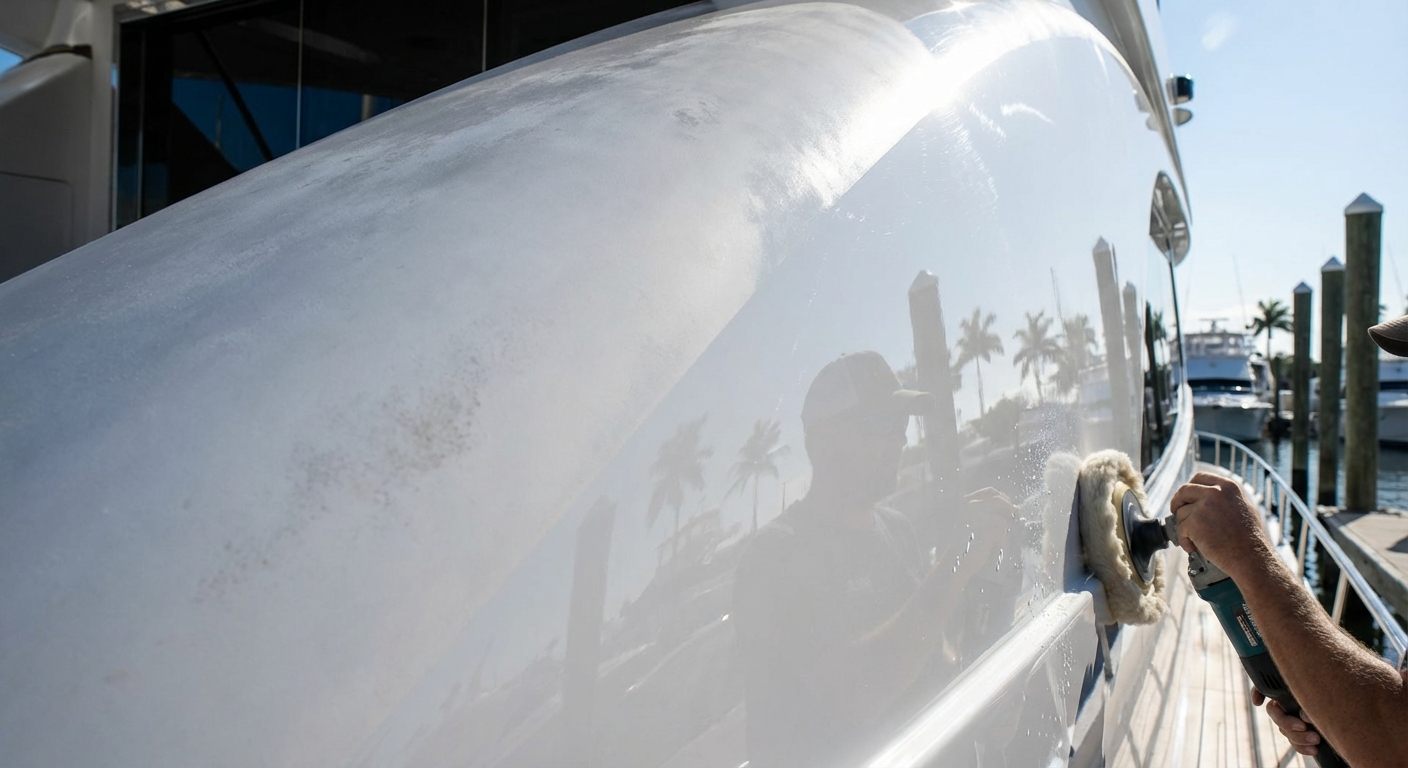
The hull of your yacht tells a story to everyone who sees it. A gleaming, mirror-like finish speaks of meticulous care and pride of ownership. A dull, chalky surface suggests neglect—fairly or not. For yacht owners preparing for the Miami Boat Show or simply wanting their vessel to reflect its true value, understanding gelcoat restoration is essential.
At EliteYachtCare, we've restored hundreds of hulls from Florida's challenging marine environment. This guide shares the professional knowledge and techniques that transform weathered gelcoat into show-stopping brilliance.
Understanding Gelcoat: What It Is & Why It Matters
Gelcoat Composition & Purpose
Gelcoat is the outermost layer on most fiberglass yachts—a specialized polyester resin applied during manufacturing that provides both the yacht's color and its primary protection against the elements. Unlike paint, which sits on top of a surface, gelcoat is integral to the fiberglass layup.
Key gelcoat properties:
- Typically 15-25 mils thick (about 0.015-0.025 inches)
- Contains color pigments, UV stabilizers, and hardening agents
- Provides waterproof barrier protecting underlying fiberglass
- Can be polished and restored multiple times over the yacht's life
- Eventually becomes too thin for further restoration, requiring repainting
Common Gelcoat Problems
South Florida's marine environment is particularly harsh on gelcoat:
Oxidation
The most common problem—appearing as a chalky, dull, or faded surface. UV radiation breaks down the gelcoat's surface layer, and this degraded material obscures the underlying color and gloss.
Yellowing
White and light-colored gelcoat often develops a yellow or cream tint from UV exposure and environmental contamination.
Water Spots & Staining
Hard water deposits, mineral staining, and waterline marks leave visible patterns that washing alone won't remove.
Scratches & Swirl Marks
Improper washing, contact with dock structures, and general use create fine scratches visible in direct light.
Crazing & Stress Cracks
Network-pattern cracks in the gelcoat surface, often caused by impact, flexing, or manufacturing issues.
Signs Your Yacht Needs Gelcoat Restoration
Visual Indicators
Compare your yacht's current appearance to these benchmarks:
- Excellent: Deep gloss, vibrant color, beads water → Maintenance only
- Good: Slight haze, minor water spotting → Light polish & protect
- Fair: Noticeable dullness, moderate oxidation → Compound & polish
- Poor: Heavy chalking, significant color loss → Full restoration
- Critical: Through-color fading, extensive damage → Evaluate repaint
The Finger Test
Perform this simple test on a cleaned section of hull:
- Rub your finger firmly across the gelcoat
- Examine your finger:
- Clean or minimal residue: Gelcoat is in good condition
- Slight chalky film: Early oxidation—polish recommended
- Heavy chalk/powder: Significant oxidation—restoration required
- Color transfer: Deep oxidation affecting pigment layer
The Professional Restoration Process
Achieving show-quality results requires systematic execution of each restoration step:
Step 1: Assessment & Preparation
Before touching a polisher, we thoroughly evaluate the yacht:
- Measure gelcoat thickness at multiple points
- Document current condition with photography
- Identify any repairs or damage requiring attention
- Test polish on small area to determine abrasive requirements
- Tape off all hardware, trim, and non-gelcoat surfaces
Step 2: Washing & Decontamination
Professional washing goes beyond soap and water:
- pH-neutral marine soap to lift general contamination
- Targeted cleaners for specific staining (rust, waterline, tannin)
- Clay bar treatment to remove embedded particles
- Iron remover for rail rust and metal fallout
- Thorough rinse and dry
Step 3: Compounding (Heavy Oxidation Removal)
Compounding uses abrasive products to remove the degraded surface layer of gelcoat, revealing fresh material below.
Product Selection:
- Heavy-cut compounds for severe oxidation
- Medium-cut for moderate correction
- Light-cut for minor refinement
Equipment:
- Rotary polisher: More aggressive, faster cutting—requires skilled operation
- Dual-action polisher: Safer, more forgiving—suitable for most situations
- Wool or microfiber cutting pads appropriate to compound aggression
⚠️ Critical Considerations
Each compounding pass removes gelcoat material. Excessive pressure or too-aggressive products thin gelcoat unnecessarily. Heat management prevents damage to underlying fiberglass. Professional experience ensures optimal removal with minimal sacrifice.
Step 4: Polishing (Swirl Removal & Gloss Enhancement)
After compounding removes oxidation, polishing refines the surface:
- Remove swirl marks left by compounding
- Develop maximum gloss and clarity
- Prepare surface for protection application
- Step down to finer polishing compound
- Switch to foam finishing pad
- Work systematically section by section
Step 5: Protection Application
The restored surface is now at its most vulnerable—the fresh gelcoat requires protection immediately.
Marine Ceramic Coating: The Ultimate Protection
What Is Ceramic Coating?
Marine ceramic coating is a liquid polymer containing silicon dioxide (SiO₂) or titanium dioxide (TiO₂) that chemically bonds with the gelcoat surface. When properly applied and cured, it creates an extremely hard, slick, hydrophobic layer that far exceeds traditional protection.
Benefits for Yachts
Exceptional Durability
Quality marine ceramic coatings provide 2-5 years of protection versus weeks for wax. Your Miami Boat Show preparation investment continues protecting your yacht long after the show ends.
Hydrophobic Properties
Water beads and sheets off coated surfaces, carrying dirt and contamination with it. This self-cleaning effect reduces washing frequency while maintaining appearance.
UV Protection
The ceramic layer shields underlying gelcoat from ultraviolet radiation—the primary cause of oxidation. Especially valuable in Florida's intense sun exposure.
Chemical Resistance
Coated surfaces resist etching from bird droppings, bug splatter, salt spray, and other environmental contamination.
Enhanced Gloss
Properly applied ceramic coating creates depth and reflection that exceeds even the finest wax, giving your yacht an "always wet" look.
Ceramic Coating vs. Traditional Wax
- Duration: Wax lasts 4-8 weeks; Ceramic lasts 2-5 years
- Hardness: Wax is soft, buffs off; Ceramic is extremely hard
- UV Protection: Wax offers minimal; Ceramic offers substantial
- Scratch Resistance: Wax offers none; Ceramic offers light scratch resistance
- Application: Wax is DIY possible; Ceramic is professionally recommended
- Cost per Year: Wax is higher (frequent reapplication); Ceramic is lower
- Salt Water Performance: Wax degrades quickly; Ceramic maintains protection
Professional vs. DIY Application
While consumer ceramic coating products exist, professional application is strongly recommended for yachts:
Professional Advantages:
- Thorough surface preparation (proper prep = proper bonding)
- Controlled environment application
- Multiple layers for maximum protection
- Infrared cure acceleration
- Quality guarantee and warranty support
- Experience avoiding costly mistakes
DIY Risks:
- Improper prep leads to premature failure
- High spots and uneven application
- Limited correction options after curing
- Environmental factors affect cure quality
- No warranty protection
Maintaining Your Restored Gelcoat
Washing Techniques
Do:
- Use pH-neutral marine-specific soap
- Wash in shade or early morning/late evening
- Work top to bottom in small sections
- Rinse thoroughly before washing
- Use soft wash mitts or brushes
- Dry with clean microfiber towels or chamois
Don't:
- Use dish soap (strips protection)
- Wash in direct hot sun
- Let soap dry on surface
- Use abrasive sponges or brushes
- Allow standing water to evaporate (water spots)
Recommended Maintenance Schedule
- After each use: Fresh water rinse
- Weekly (in use): Full wash with marine soap
- Monthly: Maintenance spray application
- Quarterly: Professional inspection and touch-up
- Annually: Ceramic coating boost/reapplication assessment
Cost Considerations
Investment Perspective
Consider gelcoat restoration as investment protection:
- Professional restoration + ceramic: $50-150/ft — Long-term value preservation
- Repeated DIY attempts: $20-40/ft (products) + time — Variable results, no warranty
- Neglect until repainting needed: $300-500/ft (paint) — Major expense, vessel downtime
Professional restoration with ceramic coating provides the best value for most yacht owners—protecting appearance, maintaining resale value, and reducing ongoing maintenance requirements.
Ready for Show-Quality Results?
Gelcoat restoration transforms not just your yacht's appearance but how you feel about your investment. EliteYachtCare specializes in complete gelcoat restoration—from assessment through ceramic coating application. Contact us to schedule your gelcoat assessment and discuss restoration options.
Related Articles
Let Elite Yacht Care Handle It
From routine maintenance to complete yacht management, we're here to make ownership effortless.
Request a Consultation