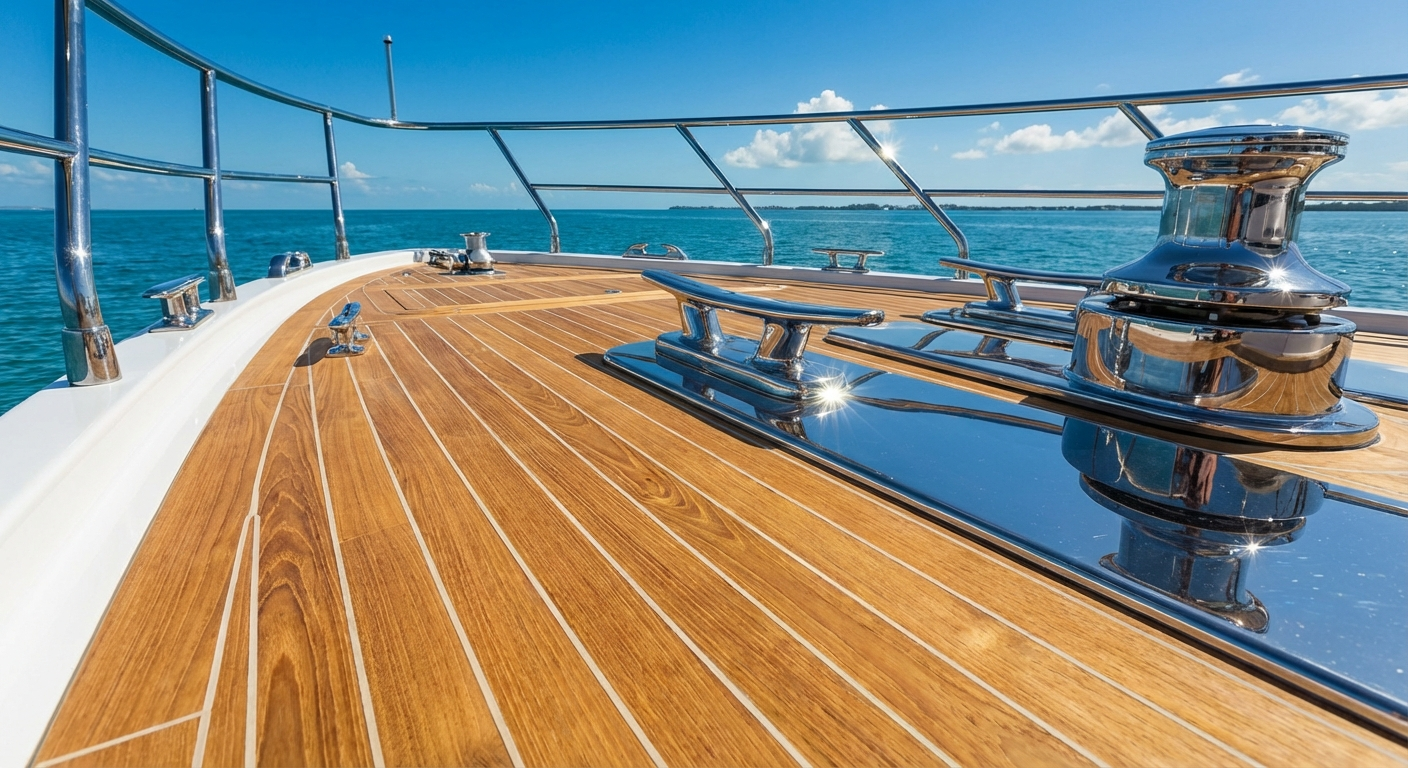
Teak decks and polished stainless steel are the signature elements of a well-maintained yacht—the details that immediately communicate pride of ownership to every observer. These surfaces require more specialized care than any other element of your vessel, and when properly maintained, they transform a yacht's appearance from ordinary to extraordinary.
At EliteYachtCare, we've refined our approach to teak and brightwork over years of caring for South Florida's finest yachts. This guide shares the knowledge that keeps our clients' vessels looking exceptional year-round.
Understanding Teak: A Premium Marine Wood
Why Teak Is Preferred for Yachts
Teak (Tectona grandis) has been the gold standard for marine applications for centuries:
Natural Properties:
- High oil content: Natural oils provide inherent water resistance
- Silica content: Creates natural resistance to rot, pests, and marine borers
- Dimensional stability: Minimal swelling and shrinking with moisture changes
- Non-slip surface: Natural texture provides excellent grip when wet
- Durability: Lasts decades with proper maintenance
Natural Aging vs. Neglect
Understanding the difference is crucial:
Natural Weathering (Acceptable):
- Uniform silver-gray color throughout
- Consistent appearance across all surfaces
- Grain remains visible and defined
- Wood remains hard and solid
- Caulking remains intact
Neglect (Problematic):
- Blotchy, uneven coloration
- Black spots or staining (mildew)
- Fuzzy or raised grain (surface deterioration)
- Soft or punky areas (decay)
- Cracked, missing, or lifting caulking
The "Silver" Patina Debate
Yacht owners often debate whether to maintain teak's golden color or allow natural silver patina. Both approaches are valid:
Silver Patina (Natural Weathering):
- Traditional yacht aesthetic
- Lower maintenance requirements
- Must be uniformly weathered to look intentional
Golden (Oiled or Sealed):
- Fresh, bright appearance
- Popular for boat show presentation
- Requires regular maintenance
- Provides additional surface protection
💡 Show Tip
For Miami Boat Show preparation, many owners choose to restore golden color—it photographs better and creates a "fresh" impression that aligns with buyer expectations.
Teak Deck Cleaning Fundamentals
Daily & Weekly Maintenance
Consistent light maintenance prevents the accumulation that requires aggressive restoration:
After Each Use:
- Rinse with fresh water to remove salt
- Address any spills or stains immediately
- Squeegee standing water if desired
Weekly (When in Use):
- Thorough fresh water wash
- Gentle brush to remove surface accumulation
- Inspect for any developing issues
- Address any marks or staining
The Cardinal Rules
- Always scrub with the grain — Never across the grain, which opens wood fibers
- Use soft bristles only — Medium or stiff brushes damage teak surface
- Never use pressure washing directly — High pressure destroys wood fibers
- Rinse thoroughly — Residual cleaner can damage teak
- Allow complete drying — Before applying any treatment
Products to Use
- Mild, pH-neutral teak cleaners
- Products specifically designed for teak (not general deck cleaners)
- Environmentally safe, biodegradable formulations
- Fresh water alone for routine maintenance
- Dedicated teak brighteners for restoring color
- Oxalic acid-based products for rust and tannin stains
Products to Avoid
Never Use:
- Dish soap or household cleaners
- Bleach (damages wood fibers and caulking)
- Pressure washers at close range or high pressure
- Abrasive cleaners or scouring pads
- Acetone or strong solvents (damage to caulking)
- Varnish removers near teak decks
Teak Restoration for Boat Shows
When to Clean vs. When to Restore
- Light dirt/salt accumulation: Regular cleaning
- Minor staining, even color: Cleaning + light brightening
- Significant discoloration: Two-part cleaner system
- Heavy oxidation, black spots: Full restoration process
- Fuzzy grain, surface damage: Sanding (professional)
Two-Part Teak Cleaners: Pros & Cons
Two-part cleaner systems (cleaner + neutralizer/brightener) are the most effective method for restoring neglected teak color:
Advantages:
- Dramatic restoration of golden color
- Removes deep staining and oxidation
- Brightens weathered teak effectively
- Results visible immediately
Disadvantages:
- Removes small amount of wood with each use
- Can damage caulking if not careful
- May affect adjacent gelcoat or paint
- Requires careful application and neutralization
- Not for frequent use (once or twice per year maximum)
Sanding: When It's Necessary
Sanding is sometimes required to restore severely damaged teak but comes with significant considerations:
When Sanding Is Appropriate:
- Raised, fuzzy grain that won't smooth
- Deep gouges or damage
- Severe surface deterioration
- Preparing for professional sealer application
⚠️ DIY Warning
Teak decks are only 6-12mm thick in many cases. We've seen many teak decks ruined by well-intentioned owners with sanders. The investment in professional restoration protects your significant investment in teak.
Teak Protection Options
Teak Oil: Traditional Approach
Advantages:
- Beautiful immediate appearance
- Enhances wood grain
- Relatively easy to apply
- Readily available products
Disadvantages:
- Requires frequent reapplication (every 2-4 weeks)
- Can become slippery when first applied
- Attracts dirt between applications
- May darken over time with build-up
- Some oils attract mildew
Teak Sealers: Modern Protection
Advantages:
- Longer lasting (3-6 months or more)
- UV protection for color retention
- Less slippery than fresh oil
- Some provide mildew resistance
- Less maintenance between applications
Disadvantages:
- More technique-sensitive application
- Higher product cost
- May require more aggressive prep for reapplication
Natural (Untreated) Teak
Advantages:
- Minimal maintenance requirements
- No product application needed
- Traditional yacht appearance
- Naturally non-slip surface
Caulking Inspection & Repair
Teak caulking is often overlooked but critical to deck integrity and appearance.
Signs of Caulking Failure
- Separation from teak edges
- Cracking or checking
- Missing sections
- Lifting or bulging
- Hardening and brittleness
- Discoloration or staining
Failed caulking undermines even the most beautiful teak—it signals deferred maintenance and potential deck issues.
Stainless Steel Brightwork
Nothing elevates a yacht's appearance like mirror-polished stainless steel catching the Florida sun.
Marine-Grade Stainless Explained
Most quality yachts use 316 marine-grade stainless, which contains molybdenum for enhanced corrosion resistance. However, even 316 stainless requires maintenance in marine environments.
Why "Stainless" Still Stains:
- Salt deposits attract moisture and cause surface corrosion
- Dissimilar metals in contact cause galvanic reactions
- Tiny imperfections trap corrosive materials
- Surface contamination (rail rust) from other sources
Common Issues
- Tea Staining: Light brown discoloration in marine environments
- Surface Rust: Orange-brown spots from contamination
- Pitting: Small holes where corrosion has penetrated—more serious
- Dullness: Loss of reflective polish from environmental exposure
Polishing Techniques
For Light Maintenance
- Clean with appropriate stainless cleaner
- Apply polish with microfiber applicator
- Work in small sections
- Buff to high shine with clean cloth
- Apply protectant if desired
For Restoration
- Clean and degrease surface
- Apply cutting compound for heavy oxidation
- Polish with progressively finer compounds
- Finish with jeweling polish
- Apply protective coating
Protection Methods
After polishing, protection extends the time between maintenance:
- Marine stainless sealant (invisible barrier)
- Polymer-based metal protectants
- Regular fresh water rinsing
- Consistent maintenance schedule
Chrome & Other Metal Finishes
Chrome Care Basics
Chrome plating is softer than stainless and requires gentler care:
- Use chrome-specific polish only
- Avoid abrasive compounds
- Clean regularly to prevent buildup
- Protect from salt exposure
- Address any peeling or flaking promptly
Bronze & Brass Maintenance
Polished Maintenance:
- Clean with appropriate metal polish
- Polish regularly to maintain shine
- Apply lacquer or wax for protection
Maintenance Schedule
Consistent maintenance prevents the need for aggressive restoration:
Teak Tasks
- After use: Fresh water rinse
- Weekly: Gentle brush cleaning
- Monthly: Thorough cleaning
- Quarterly: Sealer/oil reapplication
- Annually: Professional assessment
Brightwork Tasks
- After use: Fresh water rinse
- Weekly: Wipe with clean cloth
- Monthly: Light polish touch-up
- Quarterly: Full polish service
- Annually: Restoration if needed
Partner with Specialists
Teak and brightwork require specialized knowledge, proper products, and careful technique. Improper maintenance can cause significant damage. EliteYachtCare offers comprehensive teak and brightwork services including expert assessment, appropriate restoration, premium products, and professional polishing to mirror finish.
Related Articles
Let Elite Yacht Care Handle It
From routine maintenance to complete yacht management, we're here to make ownership effortless.
Request a Consultation